


Best-selling Apollo Beach author’s third book brings meaning to our dreams.
By MITCH TRAPHAGEN Alice Cooper shared his dreams with her. So did Anderson Cooper. Despite sharing a last name, the rock and roll icon and the CNN news personality have little in common — except, perhaps, for their dreams. Lauri Quinn Loewenberg brings meaning to our dreams. Dreams aren’t an odd collection of weird characters and circumstances, nor are they a prediction of the future. Our dreams mean something in the present, and Loewenberg, the author of three books on the subject, has dedicated her life to decoding and interpreting them; to making sense of the wild imagery and metaphors in our own personal nocturnal theaters. You are both the playwright and the director of your dreams. You are also the creative artist of your nighttime feature channel filled with imagery of falling, flying, monsters and sex. According to Loewenberg, both happy dreams and nightmares serve a purpose in day-to-day life. “Dreaming is a conversation with yourself,” she said. “There are certain symbols that show up that can warn you about your mental health. A common one is people who suffer from depression, there are symbols that can give you a heads up that you are about to fall into another one. If you start seeing rain, if your dreams start losing color and become full of black and shades of gray, these are all very big indicators that another depression is on the way.” Loewenberg goes on to say that dreams are more than just an update or early warning system for what is going on in your mind, they may also serve a purpose for your physical well-being. “Your dreams can definitely tell you what is going on with your body, there is that mind-body connection and a lot of times your body is aware of what is going on before you are aware of it; and a lot of times through your dreams your body will send signals,” she continued. Lauri Quinn Loewenberg, a dream analyst and Apollo Beach resident, is a best-selling author and a frequent contributor on television and radio programs including The Today Show, Good Morning America, Anderson Cooper’s 360 and The Dr. Oz show. Her appearances to answer questions about dreams are as varied as dreams themselves: from a radio interview with Alice Cooper to a documentary with CNN’s Dr. Sanjay Gupta. Everyone wants to know more about the mind’s nighttime theater. Have you ever had dreams so frightening that you get out of bed in the middle of the night to shake yourself out of it? Have you ever had dreams so good that you can’t wait to go to sleep at night, or you feel let down because you woke and the dream ended? Loewenberg says our dreams not only help us to solve problems in our lives, they are also malleable — like a director in a play or movie, we can control how they play out. “Dreams are positive because they are constructive,” she said. “Even if you get a nightmare that is horribly disturbing that you can’t get out of your head all day long, it is good for you because it is giving you constructive criticism about something in your life you are ignoring or mishandling. The longer we ignore or mishandle an issue, the more hostile our dreams will become. It will reach nightmare status and once it gets to that point you are sending yourself a red flag that this issue really needs to be addressed immediately.” But dreams can also provide reassurance. One of Loewenberg’s favorite dreams happened during a time of personal crisis. “In the dream I was standing in my son’s room when I suddenly became lucid and realized I was dreaming,” she said. “Normally when I have a lucid dream I decide to just float or fly or walk through walls, but this time I decided to ask a question, more specifically, I decided to ask God a question. This is something I always advise people to do when they become lucid, ask a character in your dream a question like, ‘what is the meaning of life’ and see what kind of answer you get. Well, I decided, since there was no other character in this dream but me, that I would ask God a question so I asked, ‘Is there anything I need to know right now?’ The next thing I knew, I was literally lying in God’s hand, and he lifted me up towards the ceiling and said, ‘Everything is going to be all right.’ Then I woke up.” Oprah Winfrey once said, “The best thing about dreams is that fleeting moment, when you are between asleep and awake, when you don’t know the difference between reality and fantasy, when for just that one moment you feel with your entire soul that the dream is reality; that it really happened.” In many respects, it did happen. In dreams, your senses are alive and working — happiness, fear, joy and sadness are all things that you feel in both wakefulness and dreams. Dreams are more than just fantasy; to Loewenberg they are answers that she has dedicated three books to interpreting. According to Loewenberg, there are symbols we all share in dreams. “There are a lot of common dreams that run pretty much across the board, we call these archetypes,” she said. “For example a car in your dream, it represents how you are currently going forward in life, how you are moving towards a particular goal.” Many symbols are universal with some cultural allowances. When asked if the dreams of a person in Sun City Center share similarities with the dreams of a person in Africa, Loewenberg replied, “Yes, but of course there are cultural differences. We may dream of being chased by an ax murderer while someone in Tanzania may dream of being chased by a lion.” And speaking of ax murderers, Loewenberg has analyzed more than 50,000 dreams in her career, those of celebrities and everyday people. Has she ever encountered the dreams of a closeted homicidal maniac? 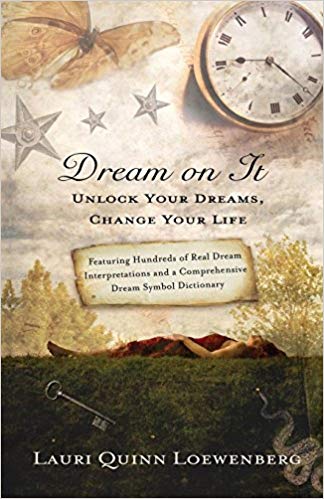 “Not someone that made me think someone could actually be a murderer, but I have had people tell me dreams that made it pretty clear they are off emotionally or psychologically; that they need serious help,” she replied. And no, Alice Cooper wasn’t among them, although she did shed some light on how his career as a rock star who embraced a horror meme began. It began with the nightmares he had as six-year-old child. Through her books and her website, thedreamzone.com, Loewenberg offers tips to help remember your dreams. She recommends taking vitamin B6, based on evidence that the supplement enhances the function of neurotransmitters, helping dreams transfer from short-term memory where they occur in your brain, to long-term memory. She also strongly recommends lying still upon waking, remaining in the same position in which you were sleeping. “If you move your body you disconnect yourself from the memory of the dream,” she said. “Also, you must write it down or tell someone your dream; otherwise it will be gone before breakfast. On average a dream will remain in your short-term memory for 90 seconds after you wake up, after that it’s gone. You have to be quick to grab it.” Loewenberg is smart, quick, attractive, and a dedicated expert in her field of study. All are attributes that shaped her as a television and radio personality. But she also conveys the tone and presence empathy, an attribute that certainly has contributed to her success as a dream analyst. She not only understands your dreams, it seems she can feel them as well. Her third book, Dream on It: Unlock Your Dreams, Change Your Life, was released nationwide on March 29. On April 8 at 7 p.m., she will appear at a book signing at the Barnes & Noble Carrollwood store at 11802 N. Dale Mabry Highway in Tampa. More than just an autograph session, Loewenberg wants to hear your dreams. Local radio personality and former 103.5 FM morning show host Skip Mahaffey will be there with her to greet attendees. “We’ll be talking to and having fun with the dreamers,” Loewenberg said of next Friday’s book signing. “Bring your dreams, bring your questions and get ready to have a lot of fun.” In addition to her books, Loewenberg also offers personalized dream analysis either via email or telephone. Dream analysis sessions may be booked via her website, thedreamzone.com. Also available are autographed copies of her first two books. Her latest book is available in bookstores nationwide and on Amazon.com. “James Cameron dreamed of the land of Pandora years before he made Avatar,” Loewenberg said. “Elias Howe was able to perfect the sewing machine because of a dream he had about being repeatedly stabbed by hungry cannibals who had holes in the tips of their spears, and we have the story of Frankenstein thanks to a nightmare that Mary Shelley had. So I say to any and everyone, keep dreaming on it. You’ll never know which dream inspires the next multi-million dollar blockbuster or the next great invention.” The answers to questions in your life may be playing out each night in your dreams. More, your personal nocturnal theater may be illustrating the road to the fulfillment of your own real-life dreams. According to Loewenberg the answers are out there. Dream on. Originally posted on ObserverNews.net 03/31/2011 http://www.observernews.net/thisweek/front_page/3153-The-Dream-Catcher.html



See how my app works to uncover what your dreams mean.


Ready to understand your dream?
Watch a real interpretation
happen in the app, then start yours.
DreamsInsightsA brighter you
Same
dreams.
Deeper
answers.